
Motor Runs but the Shade Won't Move? Check the Collar Ridge
It is one of the most misleading calls in motorized shade repair. The motor has power. The motor turns. And the shade just sits there — or moves wrong, and the limits refuse to set no matter how many times you run the programming.
Before you condemn the motor, check the cheapest connection in the whole system: the little ridge on the motor's collar, and the slot inside the tube it has to sit in.
A real save, in the Dallas area
A dealer — and a great friend of Tommy's — called in from a job in the Dallas area this week with exactly that picture: a motor that would not move the shade, on an inner tube. The diagnosis from the Exterior Shade Guru was not a new motor. It was the collar.
He checked, and that was it — the collar was not seated correctly. The shade was saved on the same visit, no parts order, no second trip. His words afterward, cleaned up: that one saved his day.
What the collar ridge actually does
A tubular motor does not grip the tube by friction. At the head of the motor sits a collar — the crown and drive assembly — and on that collar is a ridge. Every roller tube has a matching slot inside its profile. When the motor slides into the tube, that ridge is supposed to drop into the slot.
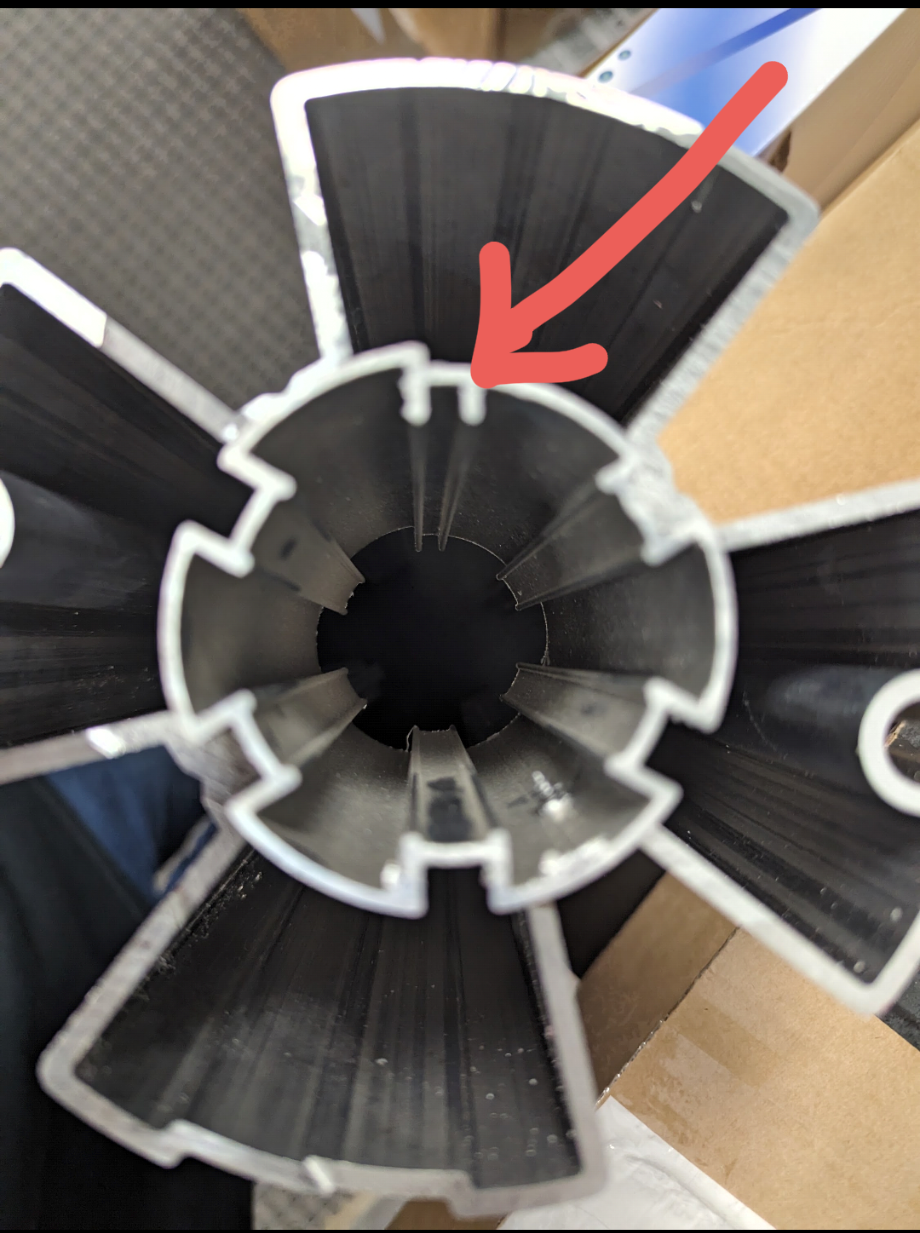
The inside of a roller tube, end-on. The arrow marks the slot — every tube has one, and the collar ridge has to seat in it. This is the tube from the Dallas job: an inner tube.
Seated, the ridge locks motor and tube together. The motor turns, the tube turns, the shade moves — and just as important, the motor can count its own rotations, which is how it knows where the shade is and where its limits are.
What happens when it is not seated
If the motor goes in without the ridge landing in the slot, the ridge ends up in the tube's larger opening instead — free to bounce between the edges of that opening every time the motor starts and stops.
That bouncing is the whole failure:
- The shade does not drive properly. The motor's turning is spent rattling the ridge back and forth instead of rotating the tube.
- The motor cannot count. Rotation counting is how a tubular motor measures travel. A collar bouncing in the opening corrupts the count.
- The limits will not set correctly. Bad count, bad limits — the shade stops short, overruns, or will not hold the programming at all.
It looks like a dying motor or bad electronics. It is a seating problem you can see with your eyes.
The two-minute check
- Look at the tube end. Every tube has the slot inside its profile — the channel the collar ridge belongs in. Know what it looks like before the motor goes in.
- Look at the motor's collar. Find the ridge. That ridge and the tube's slot are a matched pair.
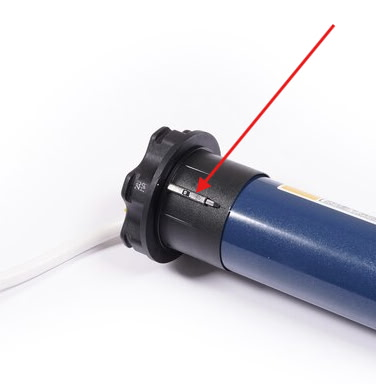
The ridge on a tubular motor's collar (arrowed). If it isn't sitting in the tube's slot, it bounces in the larger opening instead — and the motor can't count its rotations.
- Slide the motor in and confirm the seat. The ridge should sit IN the slot — not riding the larger opening beside it. If it can bounce, it is not seated.
- Then set the limits. With the collar seated, the motor counts clean, and limit programming behaves the way the manual says it should.
Why this belongs in every repair toolkit
Crown and drive parts are the adapters between a motor and a tube — the motor is only half the match. Tube profile, slot, collar, and bracket all have to agree, which is why "the motor runs" tells you so little on a service call. The pros who fix these fast check the mechanical seat before they price a replacement motor.
Out on a job right now with a shade that will not move? Ask Tommy — the Exterior Shade Guru's chat walks installers and dealers through checks like this one, free, at exteriorshadeguru.com.
Get matched with a local installer — free
Exterior Shade Guru doesn't sell shades and doesn't push any brand. Tell us about your home and we'll match you with a local installer — no cost, no obligation.
→ Homeowners & restaurants: Request a free match → Installers: Get free leads